








17. Growth Modes and Chiral Selectivity of Single-Walled Carbon Nanotubes.
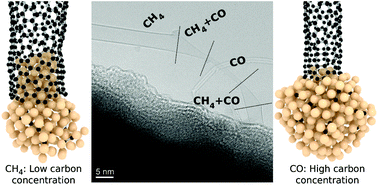 Abstract : Chemical vapor deposition synthesis of single-walled carbon nanotubes, using an Fe catalyst, and alternating methane and carbon monoxide as carbon feedstocks, leads to the reversible formation of junctions between tubes of different diameters...
URL of the article
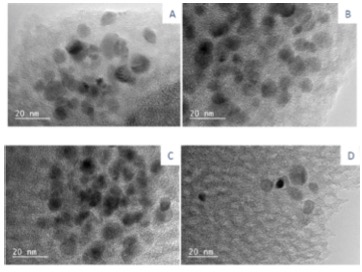
16. Magnetism as indirect tool for carbon content assessment in nickel nanoparticles.
 Abstract : Chemical vapor deposition synthesis of single-walled carbon nanotubes, using an Fe catalyst, and alternating methane and carbon monoxide as carbon feedstocks, leads to the reversible formation of junctions between tubes of different diameters. Combined with an atomistic modeling of the tube/catalyst interface...
URL of the article
15. Probing the role of carbon solubility in transition metal catalyzing single-walled carbon nanotubes growth.
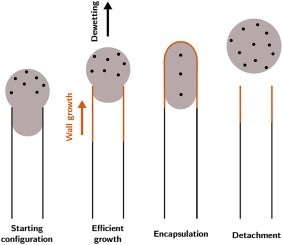 Abstract : Metal catalysts supporting the growth of Single Wall Carbon Nanotubes display different carbon solubilities and chemical reactivities. In order to specifically assess the role of carbon solubility, we take advantage of the physical transparency of a tight binding model established for Ni-C alloys, to develop metal carbon models where all properties, except carbon solubility, are similar...
URL of the article
14. Structural Properties of Double-Walled Carbon Nanotubes Driven by Mechanical Interlayer Coupling
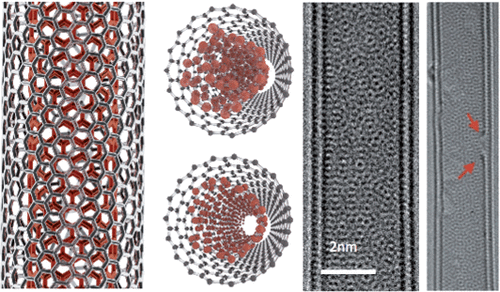 Abstract : Structural identification of double-walled carbon nanotubes (DWNTs) is presented through a robust procedure based on the latest generation of transmission electron microscope, making possible a statistical analysis based on numerous nano-objects...
URL of the article
13. Linking growth mode to lengths of single-walled carbon nanotubes.
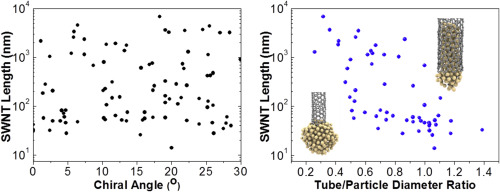 Abstract : Elucidating the key factors that determine the lengths of single-walled carbon nanotubes (SWCNTs) is of great importance for understanding the origin of chiral selectivity. We use transmission electron microscopy to thoroughly investigate as-grown SWCNTs...
URL of the article
12. Nuclear quantum effects on the thermal expansion coefficient of hexagonal boron nitride monolayer.
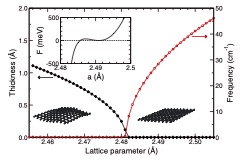 Abstract : This work examines the importance of vibrational delocalization on a basic thermomechanical property of a hexagonal boron nitride monolayer, namely its thermal expansion coefficient (TEC). Using a recently parametrized bond-order potential of the Tersoff type...
URL of the article
11. Size dependent phase diagrams of Nickel-Carbon nanoparticles.
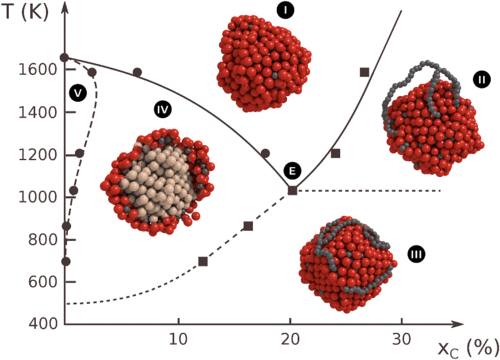 Abstract : The carbon rich phase diagrams of nickel-carbon nanoparticles, relevant to catalysis and catalytic chemical vapor deposition synthesis of carbon nanotubes, are calculated for system sizes up to about 3 nm (807 Ni atoms)...
URL of the article
10. Interplay between Raman shift and thermal expansion in graphene: Temperature-dependent measurements and analysis of substrate corrections.
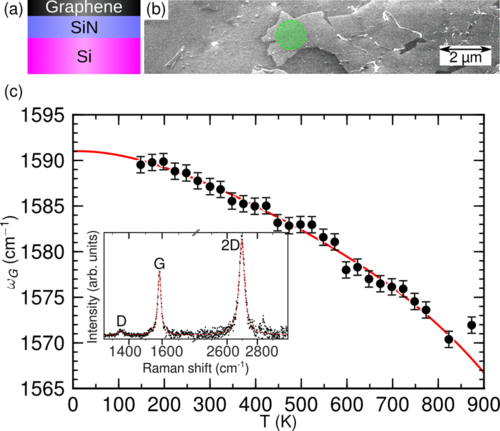 Abstract : Measurements and calculations have shown significant disagreement regarding the sign and temperature variations of the thermal expansion coefficient (TEC) of graphene α(T)...
URL of the article
9. Thermal expansion of freestanding graphene: benchmarking semiempirical potentials.
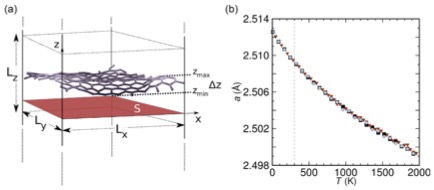 Abstract : The thermodynamical properties of free-standing graphene have been investigated under constant zero pressure as a function of temperature using Monte Carlo simulations. A variety of atomistic models have been used, including the simple three-body Stillinger potential...
URL of the article
8. Effective embedded-atom potential for metallic adsorbates on crystalline surfaces.
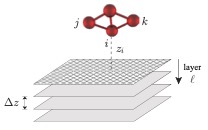 Abstract : Based on the embedded-atom method (EAM), an analytical effective potential is developed to model the interaction of a metallic adsorbate on a perfect crystalline substrate, which is also metallic...
URL of the article